Cumberland River fly fishing offers some of the finest tailwater trout action in the country. In my opinion, the Cumberland River is one of the best Trout Fisheries in the Eastern United States. I have been a Fly Fishing Guide on this river for over ten years and I still get excited every time I get to fish it. First off, there is a lot of water to fish. From Wolf Creek Dam to the Tennessee / Kentucky state line you have seventy-five miles of trout filled waters. All managed by the Kentucky Department of Fish and Wildlife. Second are the large fluctuations in generational releases. I personally have seen the US Army Corpse of Engineers run as high as 60,000 CFS through the dam during flood periods.
The Cumberland River's Character: Seventy-Five miles of opportunity
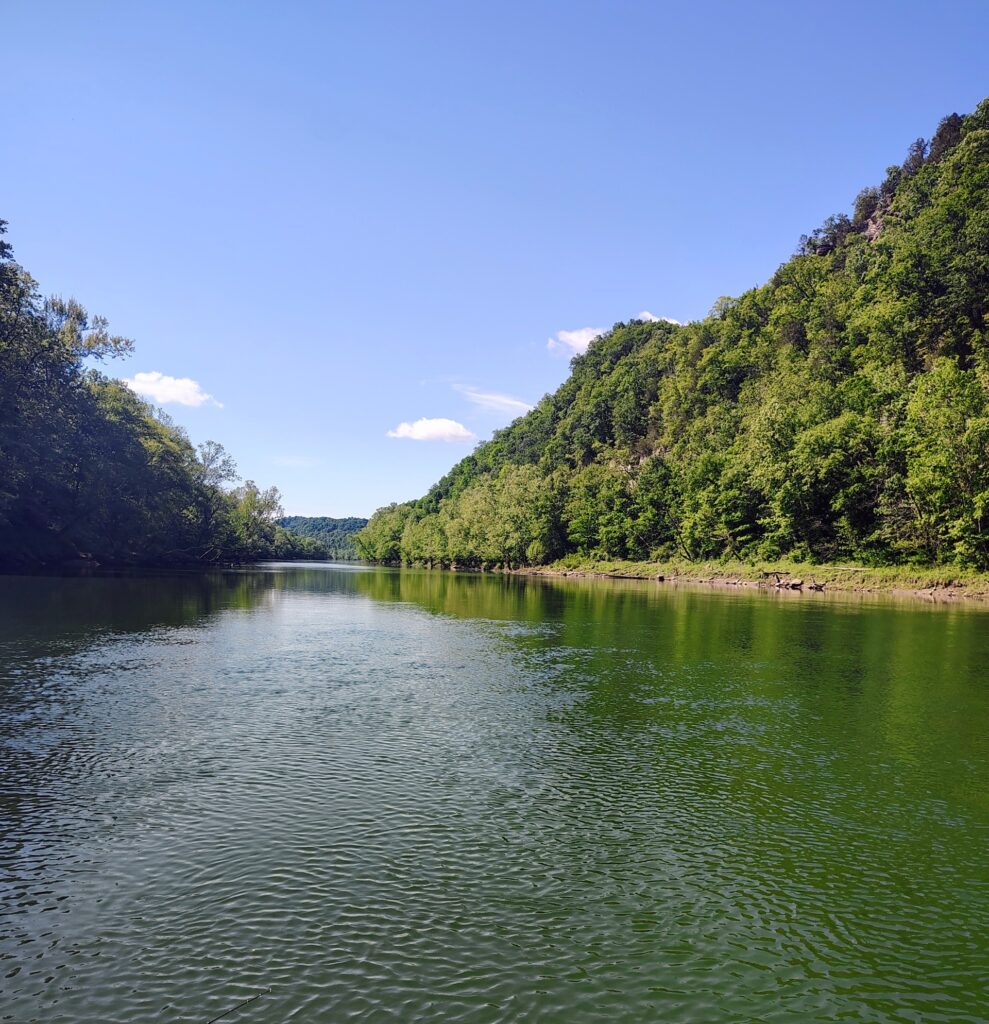
The Landscape: A River of Dual Identities
The Cumberland doesn’t just feel like a river; it feels like an ecosystem. Because it is a tailwater fed from the depths of Wolf Creek Dam, the water stays cold year-round. From the 40s in the winter to hovering between the 50s and 60s during the sweltering Kentucky heat in July and August.
As you float, you’ll notice the landscape transition from high, limestone bluffs that echo the sound of rising fish to lush, rolling bottomlands. The river is flanked by dense sycamores and towering rock walls, giving it a secluded, “wild” feel despite being easily accessible via power boat. It’s a place where you can find yourself casting into the shadows of a massive overhang one minute and navigating a wide-open gravel bar the next.
The Scale: The Largest Trout Water in the East
What surprises most first-time visitors is the sheer size of the Cumberland. While many Eastern trout streams are narrow enough to “cross with a jump,” the Cumberland is a massive tailwater that demands respect.
Room to Breathe: With seventy-five miles of trout-capable water stretching to the Tennessee line, you aren’t fighting for “spots.” If a particular hole is crowded, you simply drive the boat to another half-mile stretch to find a fresh gravel bar or a deep pool that hasn’t seen a fly all day.
Big Water, Big Tactics: The size of the Cumberland River changes how you fish. It allows for long, rhythmic drifts that aren’t interrupted by tight brush or overhanging limbs. Whether you’re throwing a heavy streamer rig against a bluff or a tiny dry fly in a slow-moving flat, the river gives you the space to work the water properly and for really long time periods.
The “Seventy-Five Mile” Advantage: Because the trout habitat is so extensive, the river spreads out the fishing pressure, allowing the fish to grow larger and stay “wilder” than they do in smaller, high-traffic streams.
What to Expect: Rainbow and Brown Trout Fly Fishing
The Prize: Rainbows and Browns of the Cumberland
The Kentucky Department of Fish and Wildlife manages the Cumberland River as a premier trout destination, and the results are evident in the health and size of the fish we net. Because of the consistent cold-water discharge from the dam, these fish feed year-round, leading to heavy-shouldered trout that fight much harder than their counterparts in smaller streams.
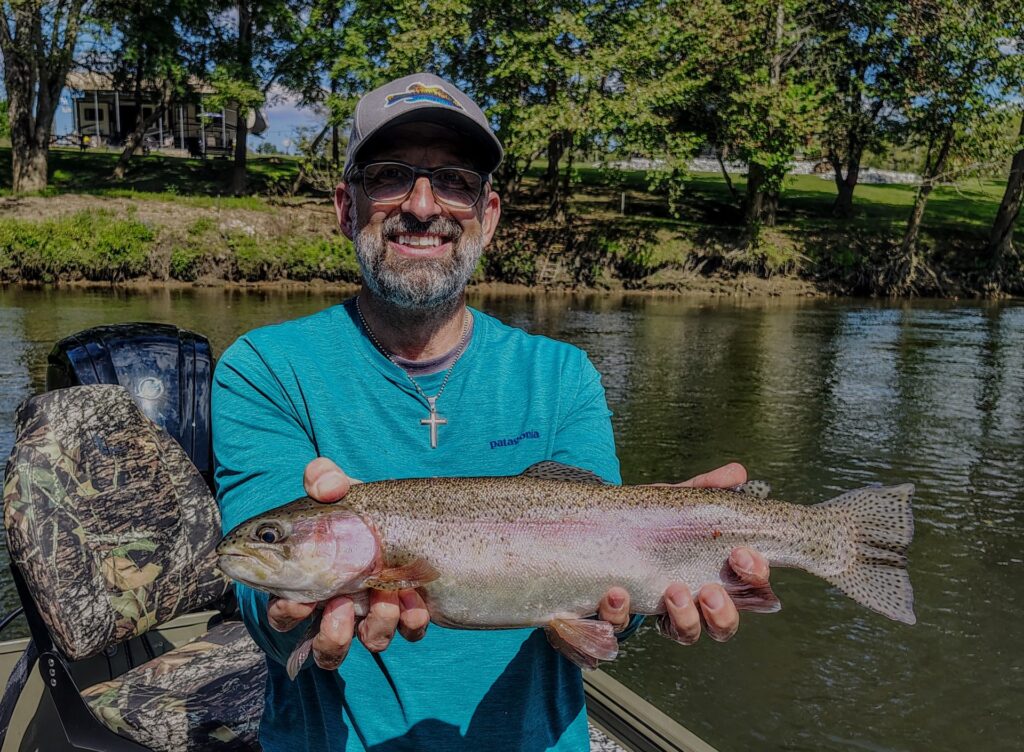
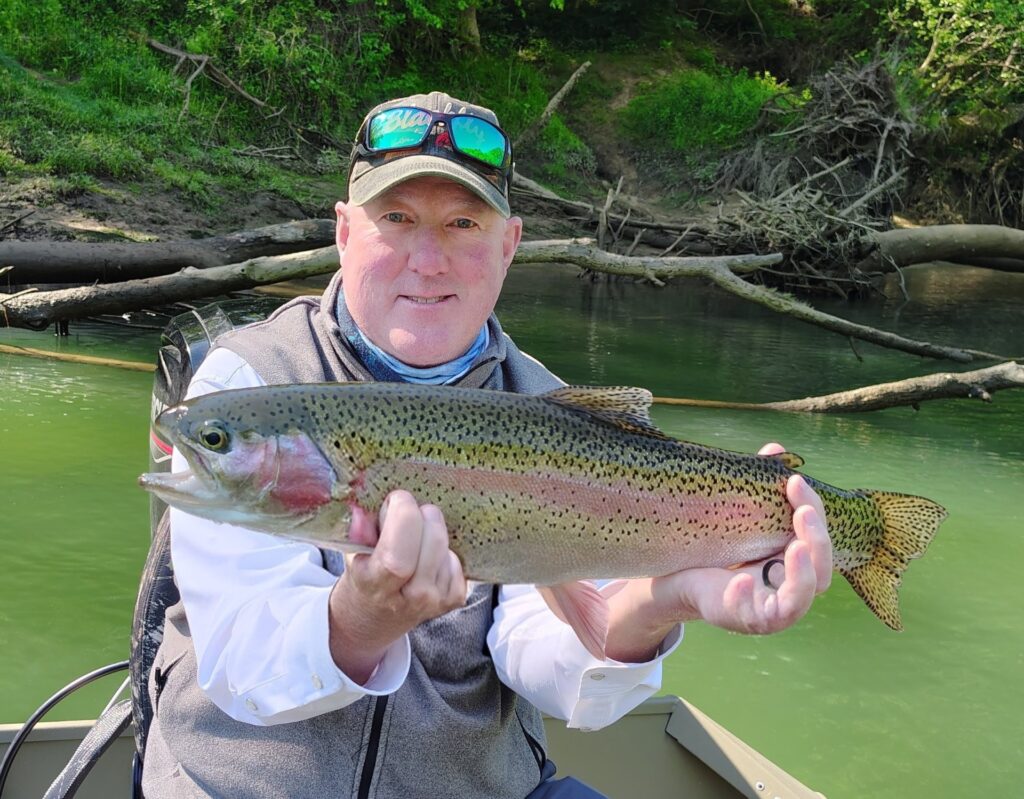
Rainbow Trout: The Aerobatic Athletes The Rainbows here are the backbone of our guided trips. They are known for their spectacular leaps and powerful runs. While many are stocked as fingerlings, they quickly “wild up” in the river’s rich environment, taking on vivid colors and an aggressive feeding habit. On a typical day, these fish will keep your rod bent and your reel screaming.
Trophy Brown Trout: The River’s Ghosts The Cumberland is famous for its Trophy Brown Trout. These are the “smart” fish of the river, often tucked deep under limestone ledges or patrolling the shadows of sunken timber. Landing a Cumberland Brown is an awesome experience; it requires patience, a stealthy approach, and often, a well-timed streamer or a perfectly drifted terrestrial. We focus on high-percentage areas where these predators wait for an easy meal to drift by.
Why the Fishing is Consistent
Unlike Western rivers that can suffer from seasonal run-off or warming temperatures, the Cumberland’s cold tailwater nature keeps the “fishable window” open as long as the flows are conducive. Whether we are targeting rising fish during a May Sulphur hatch or fishing egg patterns under an indicator in the Fall, the volume of water and colder year round water temps ensures that the trout are always looking for a meal.
Navigating the Flows: The Wolf Creek Dam Generation
Understanding the Dam Release Schedule
Because the Cumberland is a tailwater, the “weather” on the river is determined by the US Army Corps of Engineers at Wolf Creek Dam. Understanding the generation schedule is the difference between a productive day and a day of casting with not much catching.
High Water (Multiple Generators): When the Corpse is pushing heavy water (often seen during spring flood control), the river can get big, 30,000 CFS big. Even with our power boat advantage there are lengthy periods of time where you cannot fly fish the Cumberland River sucessfully. We prefer twenty-four hour average releases of 10,000 CFS or less with a preferred target range of 6,000 CFS or less. Safely navigating the river and holding position on eddies and bluffs where big Browns wait for high-protein meals to be washed down are much easier on these flow rates.
Low Water (Zero to One Generator): Lower flows reveal the river’s hidden structure—gravel bars, deep troughs, and limestone shelves. This is prime time for sight-casting and technical nymphing.
The “Sweet Spot”: Every guide has their favorite flow, but a steady release often provides the most consistent drift fishing. We monitor the release schedules daily to ensure we are putting our clients in the best possible position.
Hatches
The Cumberland River Fly Box: Patterns that Produce
On a river of this scale, your fly selection needs to cover everything from microscopic midges to massive articulated streamers. Here is what we lean on throughout the season:
Stoneflies & Midges: These are the year-round staples. Whether it’s a Large Eastern Stonefly nymph to get deep in the current or a size 18 midge for technical tailwater sips, these patterns provide consistent action regardless of the hatch.
Favorite Patterns
Tungsten Beaded Pat’s Rubber Legs in Black, Sizes Four Thru Ten
Girdle Bugs in Sizes Four Thru Eight, Non Beaded, in Black, Olive and Brown
Tungsten Beaded Kaufman’s Stone Flies in Sizes Four Thru Eight in Black and Brown
- Tungsten Beaded Zebra Midges, Size Sixteen and Eighteen in Black, Brown, Olive and Blue
Caddis & Sulphurs: While these are the “big” hatches of the year, the most consistent action happens subsurface. Instead of just watching the surface, we utilize technical nymphing and swinging techniques. This includes drifting weighted pupa patterns during the Black Caddis hatch or drifting delicate sulphur emergers just below the film. When the hatches are thick but the fish aren’t rising, these subsurface tactics are what keep the net wet and produce some of the larger numbers of fish we see each year.
Favorite Patterns
- The Holy Grail Caddis Pupae in Sizes Fourteen and Sixteen in Black, Tan and Olive
- Tungsten Beaded Jig Hare’s Ear Nymph in Sizes Fourteen and Sixteen in Black, Tan and Olive
- Tungsten Beade Jig Frenchie Soft Hackle in Sizes Fourteen and Sixteen
- La Fontaine Sparkle Pupae in Sizes fourteen and Sixteen in Caddis Pupae Green, Dark Grey, Black and Tan
- Tungsten Bead Head Pheasant Tail Flash Back Sizes Fourteen and Sixteen in Natural and Olive
- Tungsten Bead Head Sulphur Emerger Sizes Fourteen and Sixteen in Orange and Yellow
Terrestrials: During the heat of summer, we move to the banks. Slapping foam beetles and hoppers against the limestone bluffs often triggers aggressive reaction strikes from the river’s most territorial fish.
- Favorite Patterns
- Chubby Chernobyl’s in Sizes Four Thru Twelve in Black, Tan, Orange, Yellow and Red
- Amy’s Ant in Sizes Eight and Ten in Black and Olive
- Grillos Hippy Stomper in Sizes Four Thru Ten in Black, Yellow, Tan and Orange
Streamers: When we are hunting for a “hero shot,” we go big. Stripping or swinging large streamers through deep runs and transitions is a high-effort, high-reward tactic that accounts for some of the heaviest fish we net each year.
- Favorite Patterns
- Galloups Peanut Envy in Tan and Olive
- Lynch’s Drunk and Disorderly in Olive, Tan and White
- Double Deceiver’s in White, Olive, Tan and Black