Cumberland River Fly Fishing Report - July 31 2026
Current River Conditions (Burkesville, Kentucky)
The USACE is for sure on the draw down side of the graph for Lake Cumberland. We are currently at an elevation of 707.70 feet above sea level. We are still just slightly above the bottom of the SEPA Power line and well above the minimum operating line. The Corpse of Engineers does a really good job of how they manage Lake Cumberland. It is a massive lake and Wolf Creek Dam Provides a lot of power to the surrounding communities. As a general rule of thumb, they follow their operating guide pretty much to the letter. This can make predicting the ability to book guided fly fishing trips pretty easy and that is truly appreciated. If mother nature would cooperate and give us one inch of rain at a time instead of seven or eight like it did three weeks ago that would be great but I do not see that happening. If you want to check out the Graph here is a LINK.
Not much has changed since this past Sunday when I put out my last fishing report in regards to water temperature or bug activity. Temps are holding steady between 50 and 55 degrees F. The Sulphurs are still there and still sparse late in the afternoons and the BWO’s that I am seeing are about as few as they were on Sunday. Not a whole lot has changed on the hopper front either. We are not seeing a ton of eats on the big surface bugs but enough to keep it worth trying. Fishing pressure is for sure on the rise during the weekends. There were lots of boats out and about this week. The boat ramp at Bakerton this morning was about as full as I have seen it. You might have been able to squeeze one more car or truck in there but it would have been pretty tight.
Current Fly Fishing Outlook
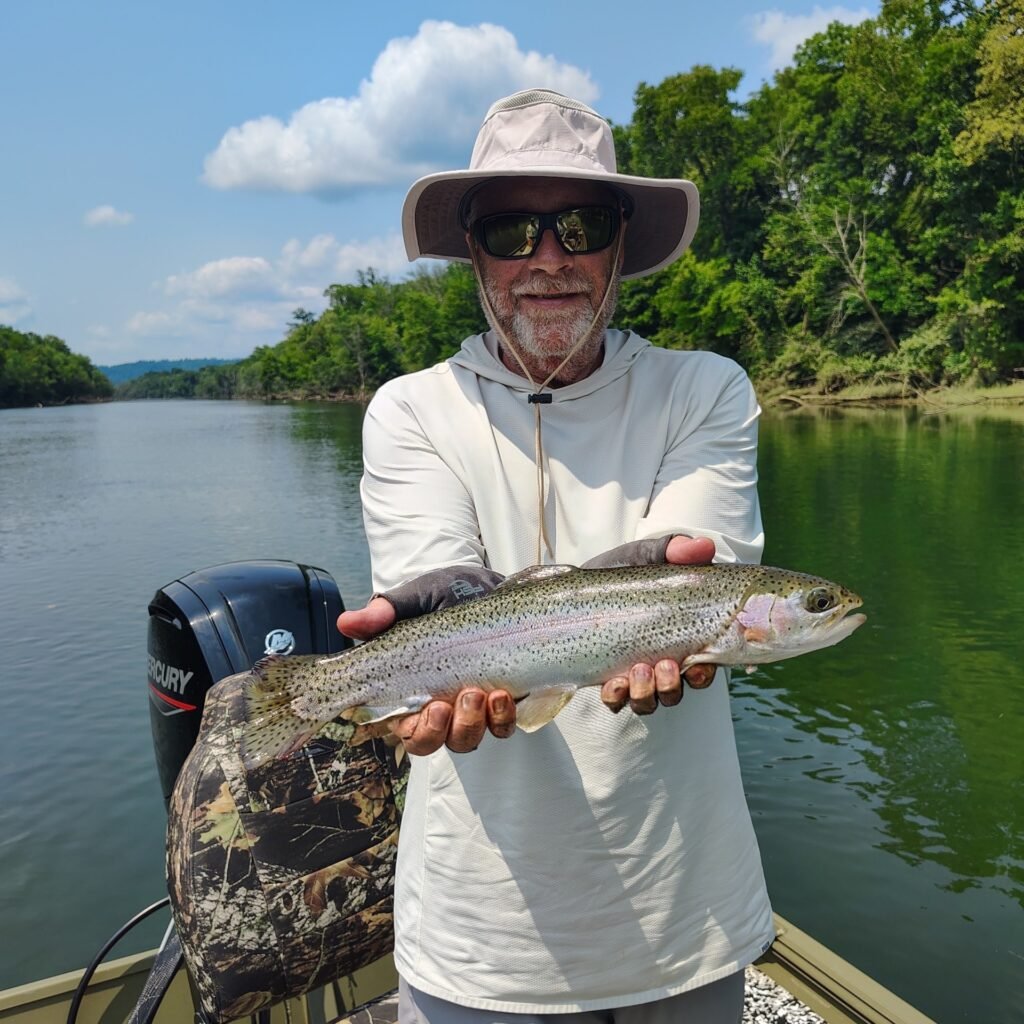
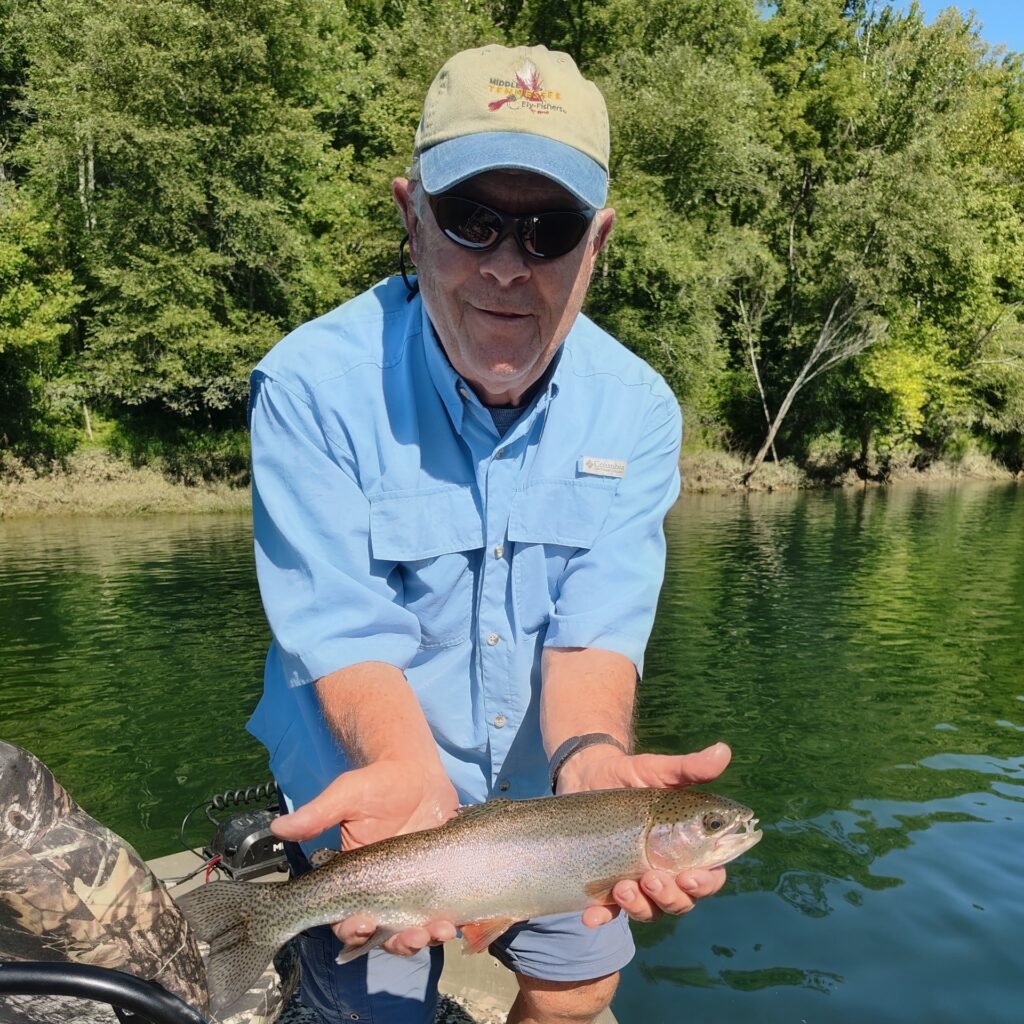
The fly fishing is staying really consistent. Find structure and a little flow and you will find fish. Timber or rock with current moving around or through it is the ticket. Most of the last three days it seems that nymph fishing has been the most reliable. A double nymph rig under an indicator has produced the bulk of our fish. I still have a lot of faith that the summer hopper bite will get better as we continue into August. I have seen a couple of yearly Cicadas on the water in the last three days as well as a few Japanese Beetles. Both of which are really good fly patterns to have with you, and both will surely find their way to a hungry Trout. I can also say that the streamer fishing is still continuing to impress. This will be the best bet for moving numbers of fish throughout much pf the remaining summer. When in doubt, throw a streamer. With the clarity we currently have in the upper twenty-five miles of river, it is still probably my favorite way to fish.
Top Fly Patterns - Cumberland River
- Dry Flies
- Sulphur Breadline (Sizes 16–18)
- Sulphur Parachute (Sizes 16–18)
- BWO Parachute (Sizes 16-18)
- Standard BWO Dry (Sizes 16-18)
- Chubby Chernobyl’s- Tan, Yellow, Black (Sizes 6-12)
- Amy’s Ant- Olive, Black (Size 6)
- Nymphs
- Tungsten Bead Head Pheasant Tail (Sizes 16–18)
- Tungsten Beaded Frenchies (Sizes 16–18)
- Pats Rubber Legs (Sizes 6-8)
- Streamers
- Woolly Bugger — Olive, Gold, Black (Sizes 4–6)
- Drunk & Disorderly-Tan, Black, Olive (Size 6)
Strategy: Creating a Process
I have found that there really is a streamlined and simple approach to most of fly fishing. It really isn’t that complicated. I have put together a pretty simple list of how to do just that below. There is no guarantees that my methodology will work for everybody but it works for me.
Where do you find Trout?
- Trout live in beautiful places. But not all beautiful places are created equally. It has been my experience that Trout prefer moving water. And I use the term “moving” in very broad sense. The Cumberland River is a giant body of water. Probably one of the largest Trout Rivers that we have in the Southeast. Most of the river has gravel bars, shallow areas, and bends that will create faster moving water and slower moving water. Based on the generation schedule of the day, you may find that there are pronounced current seams even in the long straight stretches of the river. These seams will change as the flows increase and decrease, the key is to find these areas and fish them. If you can find structure, downed trees or rock outcroppings, that create current breaks or seams, you will find fish sitting on or behind the seams in order to ambush prey or consistently feed on passing by nymphs or dries.
What methods do you use the most to catch trout?
So flies and presentation of them will vary based on what season and what method your using, but for most of the year in the Southeast, I will typically offer my folks three options for set ups.
- A Double Nymph Rig with a good adjustable strike indicator is one of the most versatile. You can cover multiple hatches or even multiple types of food for Trout like crayfish and leeches under the same indicator. The depth can be adjusted easily and quickly if you use an appropriate strike indicator. Finally, you can dead drift this set up, you can twitch it back to you to make the flies jump or you can even swing the flies up at the end of a drift.
- A Hopper / Dry Dropper set up is next. This is an extremely versatile offering that allows you to use everything from standard dry flies, to beetle patterns to hopper imitations on the surface in combination with a second fly, attached to the dry via tippet, such as a bead headed nymph or even a pats rubber legs fished below it. I mostly fish small nymphs like midges under standard dry flies and larger nymphs like a Girdle bug or a Pats Rubber Legs under a larger attractor dry as they can just simply support the weight of the dropper fly. This type of combination can also be dead drifted, twitched or swung up at the end of a drift.
- A Streamer is the third set up I carry with me at all times. I like to have a light sinking line on a six or seven weight, or a little heavier sinking line on an eight or nine weight. If I am streamer fishing in the winter it is almost always on a 250 grain sinking line on an eight weight. I prefer to fish streamers in or around structure with varying retrieves. Some slow some fast once again this depends on the season and what the fish are responding to. Sometimes they prefer really fast long strips, other times it is short slow trips that do the trick. You can also move your streamer with a combination of strips and rod tip movements. The key is to get their interest.
On The Water This Week
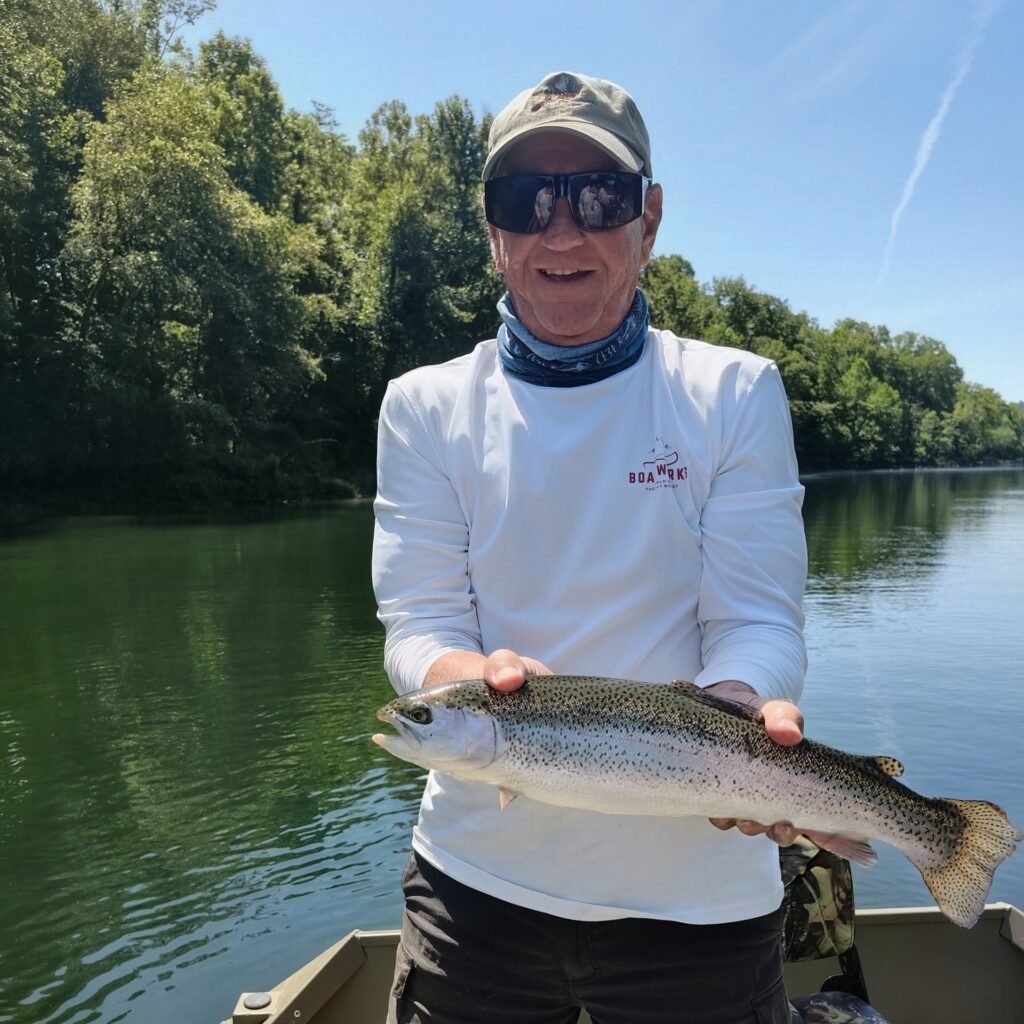
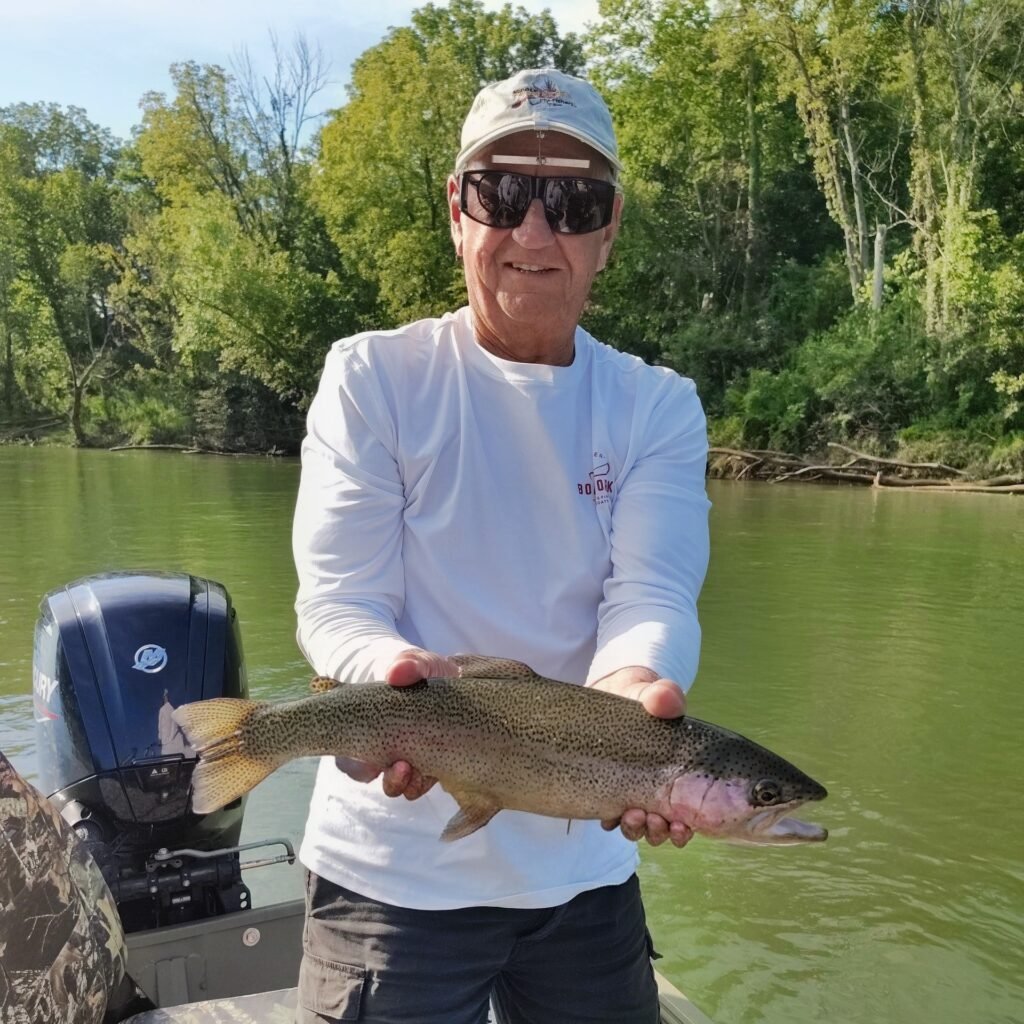
This week was spent with really good friends and good times were had by all. The fishing was good most of the week except Wednesday. For some reason, the bite for me was just off that day. I had a really good single angler and we tried a ton of different flies in a ton of different ways but the big fish were just not cooperating with my offerings. We did manage to land a couple of slot fish, and put together a decent day overall but we literally had to work for every fish we landed. There was no givens that day. The rest of the week so far has been great. Lots of fish and good fish to hand, so no complaints. I was fortunate to get to fish with Harold and Tom for the last two days. Both of these guys are great anglers and both are really good at tying flies. It was announced to me today that I will in all probability not be seeing Tom again. He is embarking on a new adventure and moving to Colorado to be closer to family. Tom has been instrumental in the Middle Tennessee Fly Fishers for a long time and he will be missed by all. So good luck my friend on your new adventure. I know you will have a great time exploring new and old rivers in the West!
The Cumberland River is a massive, world-class fishery, and because of its incredible reputation for trophy trout, prime hatch dates and peak weekends fill up months in advance. Whether you want to witness the explosive spring caddis hatch, cast grasshoppers against the summer banks, or hunt a personal-best Brown trout on heavy streamers, securing your dates early is essential.
Questions? Call or Text: 865-936-1557 or drop us a line through our Contact Page.
Real Time Updates: View our current Fly Fishing Reports to see what is happening on the Cumberland River right now.